Table of Contents
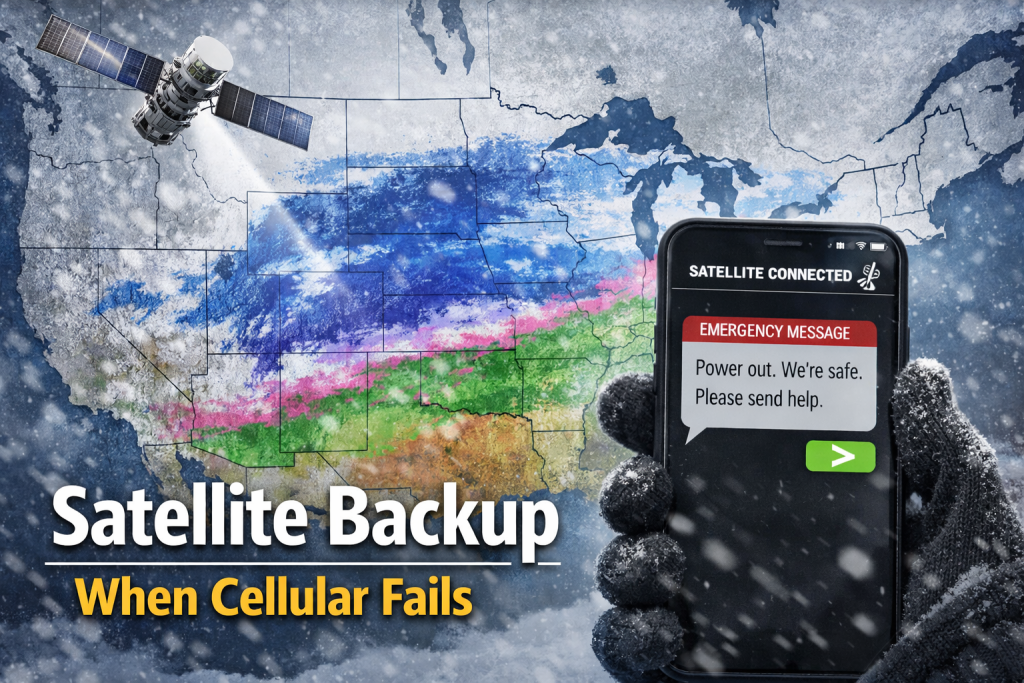
When severe weather disrupts traditional cellular networks, staying connected becomes more than a convenience. It becomes a safety issue. In response to widespread winter storm impacts across the U.S., T-Mobile has enabled its T-Satellite service at no cost for customers in affected areas, automatically activating satellite connectivity on compatible devices.
This move highlights a growing shift in the wireless industry. Cellular networks are no longer limited to ground-based towers alone. Satellite connectivity is becoming a built-in backup layer for everyday mobile users.
What Is T-Satellite?
T-Satellite is T-Mobile’s satellite-to-mobile service that allows compatible smartphones to connect directly to satellites when traditional cellular coverage is unavailable. Instead of relying solely on nearby towers, phones can communicate with satellites acting as coverage extensions in the sky.
The service is designed primarily for resilience. When towers are down due to power outages, damage, or congestion, satellite connectivity provides a critical fallback.
Key capabilities include:
- Satellite-based SMS messaging when cellular service is unavailable
- Emergency messaging support, including text-to-911 in supported areas
- Automatic activation when conditions require it, no manual setup needed
For customers on eligible plans, T-Satellite is normally included or available as an add-on. During major storm events, T-Mobile has chosen to temporarily enable it for impacted customers regardless of plan level.
Why T-Mobile Is Enabling It for Free During Storms
Severe winter storms can affect large geographic areas simultaneously, overwhelming or disabling cellular infrastructure. Ice, snow, and power failures can leave communities without reliable communications for hours or days.
By enabling T-Satellite automatically, T-Mobile ensures that customers can:
- Send and receive basic messages even when local towers are offline
- Communicate with family members during emergencies
- Maintain access to critical alerts and emergency services
This approach turns satellite connectivity into a practical safety feature rather than a specialized or expensive add-on.
Device Compatibility and What to Expect
T-Satellite works with many modern smartphones that already include satellite-ready hardware. Most recent iPhone, Samsung Galaxy, and Google Pixel models support this capability.
When active, users may notice:
- A satellite indicator on their device when cellular service is unavailable
- Slower message delivery compared to normal cellular texting
- Best performance outdoors with a clear view of the sky
Satellite connectivity is not intended to replace high-speed mobile data. Instead, it provides essential communication when nothing else works.
Satellite Connectivity Is Becoming the New Backup Standard
T-Mobile’s use of satellites reflects a broader industry trend toward hybrid connectivity. Wireless providers are increasingly combining terrestrial networks with satellite systems to improve reliability in rural areas, remote locations, and disaster scenarios.
This approach mirrors what many businesses already do with multi-WAN routers, cellular failover, and satellite links. Redundancy matters. When one path fails, another keeps traffic flowing.
For consumers, that redundancy is now starting to live directly in their smartphones. Need assistance – contact 5Gstore.com
What This Means for the Future of Wireless
T-Satellite’s emergency activation shows how satellite and cellular technologies are converging. Over time, services like this are expected to expand beyond emergency texting into broader use cases, improving coverage in hard-to-reach areas and during major disruptions.
For customers, the takeaway is simple: modern wireless networks are becoming more resilient, and satellite connectivity is no longer a niche solution. It is quickly becoming part of the standard connectivity toolkit.
Frequently Asked Questions (FAQ)
What is T-Satellite?
T-Satellite is a satellite-to-mobile service from T-Mobile that allows compatible smartphones to connect directly to satellites when traditional cellular coverage is unavailable. It is designed primarily for emergency and backup communication.
When does T-Satellite activate?
T-Satellite activates automatically when a compatible device loses access to T-Mobile’s terrestrial network and is located in an area where satellite service is available. During major storm events, T-Mobile may enable the service proactively for affected customers.
Is T-Satellite free?
During severe weather events, T-Mobile has enabled T-Satellite at no cost for storm-affected customers. Outside of emergency situations, the service is included with select plans or available as an add-on.
Which phones support T-Satellite?
Many modern smartphones already support satellite connectivity, including newer iPhone, Samsung Galaxy, and Google Pixel models. No additional hardware is required.
Does T-Satellite work indoors?
Satellite connectivity works best outdoors with a clear view of the sky. Buildings, trees, and terrain can limit signal strength, so users may need to step outside for reliable messaging.
Is satellite connectivity a replacement for cellular service?
No. Satellite connectivity is a backup layer designed for emergencies and coverage gaps. Cellular networks still provide far higher speeds and capacity under normal conditions.
How does this compare to satellite internet services like Starlink?
T-Satellite is optimized for mobile phones and emergency messaging, while satellite internet services are designed for broadband data connections using dedicated hardware such as dishes or terminals.