Table of Contents
Teltonika Expands Again in Vilnius: A New Electronics Factory Planned in Liepkalnis
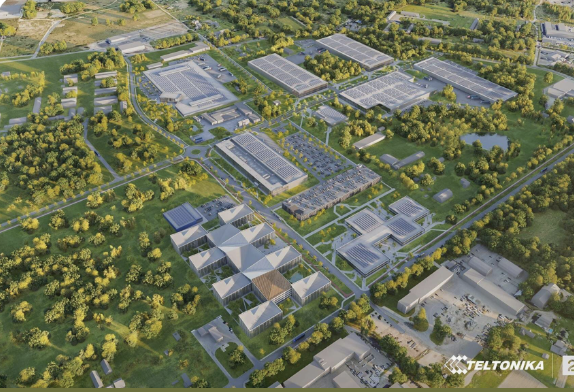
Teltonika is continuing to grow its manufacturing footprint in Lithuania. A new electrical components factory is being planned in Vilnius, in the Liepkalnis area, as part of the next stage of the Teltonika High Tech Hill technology park.
Quick takeaways
- A new factory is planned on Svylos Street in Liepkalnis, Vilnius
- The plan references a 6,100 square meter building on a 2.1 hectare plot
- The facility is expected to employ about 360 people across three shifts
- Planned production is up to 9.6 million units per year of electronic products, including surface mount boards used in cellular, WiFi, Bluetooth, Ethernet LAN, and GNSS solutions
What is being built?
The project described is a smaller electrical components factory located next to an existing electronics assembly plant in Liepkalnis. The plan indicates the new facility will be smaller than the nearby assembly plant, but still significant in scale.
From a practical perspective, a factory like this is not just “more space.” It is another piece of the supply chain being built closer to where Teltonika already manufactures, assembles, and develops products.
What will the factory produce?
The information shared about the project points to production of electronic products and surface mount boards.
If you are not familiar with surface mount boards, these are the populated circuit assemblies that become the core of many connected devices. They are used in products that support:
- Cellular connectivity (GSM and related technologies)
- Local wireless connectivity (WiFi and Bluetooth)
- Wired networking (Ethernet LAN)
- Positioning and timing (GNSS)
In the connectivity world, these boards are the guts of devices like routers, gateways, industrial controllers, trackers, and sensor platforms.
How this fits into Teltonika High Tech Hill
This planned factory is described as part of the second phase of Teltonika High Tech Hill in Liepkalnis.
The bigger story here is that Teltonika has been investing in a more vertically integrated approach to manufacturing. Vertical integration means bringing more of the production steps under one roof, or at least within one tightly connected campus. That can reduce dependencies on outside suppliers, speed up production changes, and create more flexibility when certain components become hard to source.
Why this matters to customers buying connectivity hardware
Even if you never plan to visit Vilnius, expansions like this can have real downstream effects over time.
1) Potential for steadier supply
More internal capacity can help a manufacturer handle demand spikes, shorten bottlenecks, and reduce disruptions caused by global shipping or outsourced production constraints.
2) Faster iteration and scaling
When more of the process is owned and controlled, it can be easier to ramp production, adjust builds, and respond to component changes without major delays.
3) Long term commitment
Building additional factories is a signal that the company expects continued growth in connected device demand, especially across industrial and IoT markets where reliable supply matters.
What we do not know yet
At this stage, the public information does not include the investment amount or the construction start timeline. So this should be viewed as a planned project, not an immediate change to product availability.
Bottom line
Teltonika is investing again in local production capacity in Vilnius, with plans for a new electrical components factory in Liepkalnis. The project points to meaningful output and staffing, and it aligns with a broader push toward vertically integrated manufacturing. For customers, that is generally a positive sign for long term stability, flexibility, and scalability in the hardware supply chain. Looking to purchase Teltonika? 5Gstore is a Teltonika distributor, so reach out!