Table of Contents
For years, “going 5G” often meant jumping to big bandwidth, bigger power draw, and higher costs than many industrial deployments actually need. That’s changing fast.
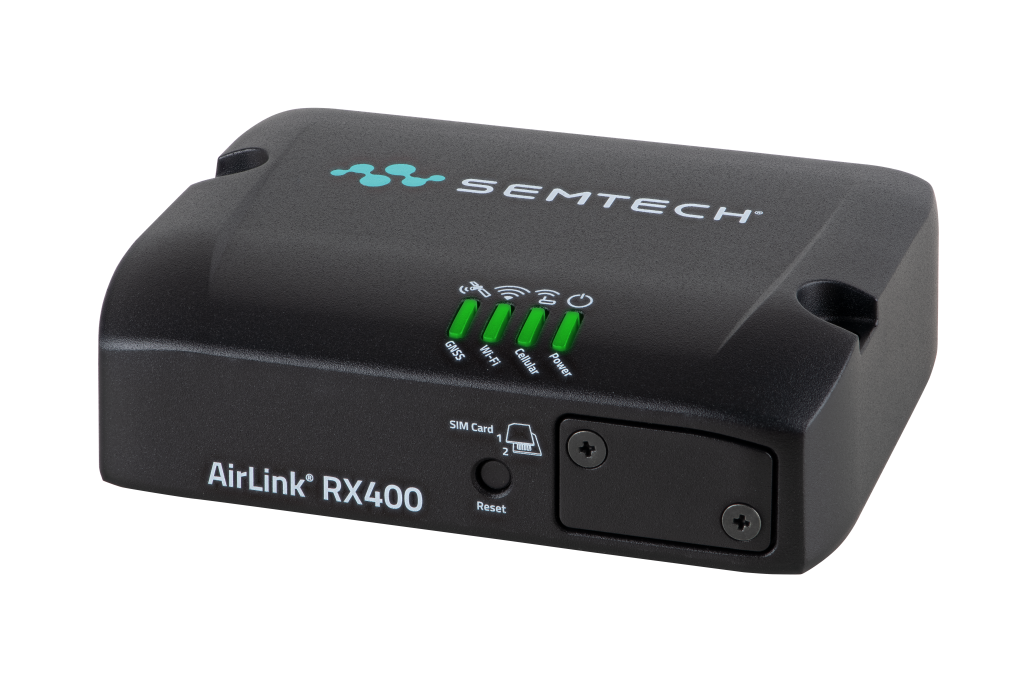
Semtech has officially introduced the AirLink RX400, a rugged 5G RedCap router designed specifically for industrial IoT environments where reliability, longevity, and power efficiency matter more than extreme speeds.
If you support remote infrastructure, smart utility sites, oil and gas monitoring, industrial automation, or other long-life deployments, the RX400 is one of the most interesting “next step” routers we’ve seen in a while.
What is 5G RedCap (and why does it matter)?
5G RedCap stands for Reduced Capability, and that’s a good thing.
It’s a version of 5G built to bridge the gap between traditional IoT (low-power, low-speed) and full 5G broadband (high-speed, high-cost). RedCap targets industrial and commercial IoT applications that need:
- Modern 5G longevity
- Lower latency than older IoT tech
- Reasonable throughput (not gigabit-class speeds)
- Lower power consumption
- Simpler antenna requirements
RedCap vs “Full 5G” (eMBB) in plain English
With RedCap, you typically get:
- Lower complexity
- Lower power draw
- Lower cost
- 2 cellular antenna elements instead of 4
And you still keep the big advantages of modern 5G networks, including support for 5G Standalone as deployments expand.
RedCap is an ideal fit for industrial IoT where you’re connecting and managing equipment, not streaming 4K video 24/7.
Meet the AirLink RX400: Built for the real world
The Semtech AirLink RX400 is built for organizations that need reliable, long-lived connectivity in demanding environments, including remote and unmanned sites.
What makes the RX400 different?
Instead of retrofitting a legacy router with a new cellular module, the RX400 is engineered as a modern industrial platform with features that support long deployment lifecycles.
That includes:
- Rugged design for harsh environments
- Ultra-low idle power draw (huge for solar and battery installs)
- Industrial interfaces like RS-232
- Edge computing capability
- Flexible management options
- Support for private networking deployments
RX400 Key Highlights (Quick Specs + Why You’ll Care)
✅ Rugged by design
The RX400 is built to survive real industrial conditions, including:
- MIL-STD-810H ruggedness
- IP64 rating
- Wide operating temperature range: -40°F to +158°F
This is the kind of box you deploy in substations, roadside cabinets, remote enclosures, and field infrastructure where “consumer-grade” hardware won’t last.
✅ Ultra-low power consumption (<1W idle)
Power is often the limiting factor for remote IoT deployments.
The RX400 is designed for very low idle power, making it a strong option for:
- Solar-powered sites
- Battery-backed installations
- Remote monitoring locations where power budgets are tight
✅ Modern connectivity for industrial deployments
The RX400 supports 5G RedCap plus LTE Cat-4, which means you can deploy today and transition naturally as 5G RedCap expands.
It also supports private-network focused connectivity options that matter for enterprise and utility deployments, including:
- CBRS (Band 48)
- Anterix (Band 106)
✅ Industrial-ready I/O and ports
This is where the RX400 really separates itself from “basic LTE routers.”
You get:
- 1x Gigabit Ethernet port
- Built-in RS-232 serial (single/dual RS-232 depending on model)
- USB-C with power redundancy (helpful for resilient power designs)
- Dual nano-SIM support for carrier flexibility and failover
- Dual-band GNSS for location-aware deployments
- Optional WiFi 6 (1×1) for local access / commissioning
✅ Simple upgrades from older AirLink deployments
One of the biggest wins for existing AirLink customers is the migration path.
The RX400 is designed with deployment continuity in mind, including:
- A compact form factor
- Familiar installation patterns
- A simplified antenna setup (2-element cellular)
For teams that have standardized deployments, anything that avoids redesigns and truck rolls is a big deal.
RX400 Use Cases: Where this router shines
Here are some of the most common “perfect fit” scenarios for the RX400:
Utilities and grid modernization
- Substation connectivity
- Distribution automation monitoring
- SCADA backhaul
- Remote asset visibility
When you’re planning for 10+ year lifecycles and modern security expectations, RedCap becomes a smart bridge between LTE today and 5G tomorrow.
Oil and gas sites
- Pipeline monitoring
- Remote sensors and leak detection
- Unmanned infrastructure connectivity
- Edge monitoring systems
These environments demand durability, dependable uptime, and often low-power operation at remote sites.
Industrial remote monitoring and automation
- Connected machines
- Smart infrastructure telemetry
- Cabinet-based deployments
- Private networking requirements
If you need the reliability of industrial routing without paying for “full 5G broadband” performance you’ll never use, RX400 fits the bill.
RX400 vs EX400: Which one should you use?
Semtech launched two “right-sized 5G” routers in this family:
- RX400 = rugged, industrial, harsh environments
- EX400 = semi-rugged, commercial IoT, protected indoor deployments
Choose the Airlink RX400 if you need:
- MIL-STD ruggedness and IP64 protection
- Extreme temperature support
- Serial connectivity for industrial devices
- The most durable option for remote field infrastructure
Deployment Tips (What to plan for)
Before installing the RX400 in the field, plan for these items:
- Antennas: Use a 2-element cellular antenna setup compatible with 5G RedCap/LTE
- SIMs: The RX400 uses nano-SIM (4FF)
- Power: Plan for standard DC input plus USB-C redundant power if you want extra resilience
- Management: Decide if you want cloud-based monitoring or on-premises management (for cloud-averse deployments)
- Security: Treat it like critical infrastructure: segment networks, lock down access, and use VPN policies as needed
If you need assistance, need to purchase, get a quote or just find out more, just contact 5Gstore.com
FAQ: Semtech AirLink RX400
What is 5G RedCap?
5G RedCap (Reduced Capability) is a 5G standard designed for IoT and industrial deployments that need modern 5G longevity and efficiency, without the complexity, cost, and power draw of full 5G broadband.
Is the RX400 “full 5G”?
It’s 5G RedCap, not gigabit-class 5G broadband. It’s meant for industrial IoT performance, not ultra-high-speed applications.
How many cellular antennas does the RX400 need?
RedCap uses 2 cellular antenna elements, which is simpler than many full 5G routers that require 4 antenna elements.
Is the RX400 rugged enough for outdoor or harsh environments?
Yes. The RX400 is designed for harsh conditions with a rugged build, MIL-STD-810H, and IP64 protection.
Does the RX400 support dual SIM?
Yes. It supports dual nano-SIM (4FF) for carrier flexibility and redundancy.
Does the RX400 include serial connectivity?
7) Does the RX400 include serial connectivity?
Yes. The RX400 includes RS-232 for supporting industrial devices and legacy equipment that still relies on serial communications.
Can I use the RX400 for private LTE/5G networks?
Yes. The RX400 supports private-network focused options like CBRS (Band 48) and Anterix (Band 106), depending on your deployment needs.
Does the RX400 have WiFi?
There are models available with optional WiFi 6 (1×1), depending on the variant.
How is the RX400 managed?
It supports modern remote management workflows, including cloud-based options and an on-premises path for organizations that prefer local control.